
Korean Beef Bowl: The Boldest, Speediest Weeknight Dinner You’ll Make
If you’re craving a dinner that’s bold, saucy, and comes together in less than half an hour, say hello to your new obsession: the Korean Beef Bowl. This authentically flavored, high-protein powerhouse is a weeknight savior for anyone who loves quick, deeply satisfying meals with a real punch of gochujang and sesame umami. Why settle for bland when you can make a Korean Beef Bowl in just 20–25 minutes with exact ingredient quantities and diet-friendly tweaks?
This Korean Beef Bowl recipe delivers true Korean BBQ vibes with caramelized beef, a sticky-sweet spicy glaze, and that signature sesame kick—all with pantry staples and no fuss. The dish is built for speedy meal prep, lean eating, and freezer-friendly batch cooking. Make it keto, vegan, or gluten-free in minutes, and enjoy restaurant-level flavor that fits busy schedules and nutrition goals. Ready? Let’s jump in!
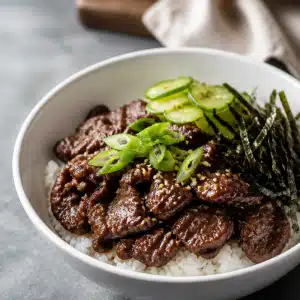
Korean Beef Bowl: The Best 20-Minute Recipe For Busy Weeknights
Ingredients
Main Ingredients
- 1 lb ground beef 450 g; use 80/20 for classic flavor or 93/7 for a leaner & lighter result
- ¼ cup soy sauce 60 ml; regular or low-sodium. Or tamari (1:1 swap) for gluten-free
- 2 tbsp gochujang (Korean chili paste) 30 g; adjust to taste (1–2 tbsp for less/more spice)
- 2 tbsp brown sugar packed, 24 g; or 1 tbsp honey (for mellow sweetness)
- 1 tbsp toasted sesame oil 15 ml; for aroma, divided as needed
- 3 cloves garlic minced (about 1 tablespoon)
- 1 tsp fresh ginger 4 g, finely grated
- 2 scallions thinly sliced (reserve some green tops for garnish)
- 1 tbsp toasted sesame seeds for topping
- 1 cup cooked short-grain or medium-grain rice per person 190 g per cup; or 1 cup cauliflower rice for low-carb
- 1 tsp gochugaru optional; Korean chili flakes or crushed red chili flakes (for spicy beef bowl heat)
- 1 tsp cornstarch optional; mixed with 1 tbsp cold water for thickening glaze
- Optional sides/toppings shredded carrots, cucumber matchsticks, quick kimchi, sliced radish, nori strips
Instructions
Instructions
- Mise en place: wash and slice scallions, mince garlic and ginger, measure out sauce ingredients, and prepare rice or cauliflower rice separately according to package directions.
- Place a heavy 10–12 inch skillet (preferably cast iron) over medium-high heat for 3–4 minutes to preheat.
- Add ground beef to the hot skillet and let it cook undisturbed for 3–4 minutes—listen for sizzling and look for deep caramel brown edges; don’t stir yet.
- Break up the beef with a wooden spoon and continue to cook, stirring every minute or so, until fully browned with crispy bits and no pink remains—about 2–3 more minutes; drain excess fat if desired.
- Lower heat to medium. Make a well in the center of the skillet; add 1 tbsp sesame oil, minced garlic, grated ginger, and (if using) gochugaru. Sauté for 30 seconds until fragrant, then stir into the beef.
- In a small bowl, whisk together soy sauce, gochujang, and brown sugar (or honey) until smooth.
- Pour the sauce mixture over the beef. Stir well, scraping up any browned bits (fond) from the skillet bottom, and simmer for 2–3 minutes, letting the sauce bubble and thicken to a glossy, spoon-coating texture.
- If you prefer a clingier glaze, combine 1 tsp cornstarch with 1 tbsp water, drizzle into the skillet, and simmer for another 30–60 seconds until very glossy (optional).
- Turn off the heat. Stir in most of the scallions, saving some green tops for garnish. Taste and add a splash more sesame oil or a dash of rice vinegar for extra brightness if desired.
- Assemble bowls: scoop 3/4–1 cup cooked rice per bowl. Top each with 4 oz (about 110 g) beef, sprinkle with scallion greens, sesame seeds, and any favorite sides (carrot, cucumber, kimchi, nori strips). Serve hot.
Notes
🍽️ Recipe At A Glance
- Prep Time: 7 minutes
- Cook Time: 15–20 minutes
- Difficulty: Easy
- Servings: 4
- Why This Recipe Works
- Ingredients You’ll Need
- Step-by-Step Cooking Instructions
- Recipe Variations & Dietary Modifications
- Serving Suggestions & Pairings
- Storage & Meal Prep Tips
- Nutritional Information
- Conclusion
- FAQ
Why This Recipe Works
This high protein Korean beef bowl is designed for max flavor, speed, and reliable results every time. The secret? Hot pan browning for caramelized, slightly crispy beef, then a glossy glaze with a balance of gochujang heat, sweet brown sugar, salty soy, zingy fresh ginger, and a drizzle of toasted sesame oil. You’re not just dumping sauce on meat—you’re building flavors in skillful sequence.
Browning the ground beef at a sizzling medium-high heat (aim for a pan surface of 375–400°F or 190–205°C) delivers Maillard magic—golden edges, deep savoriness, and a juicy but not greasy finish. A short 2–3 minute simmer concentrates the sticky sauce, soaking those big umami flavors right into the meat without drying it out. A final fresh scallion and sesame sprinkle brings color, crunch, and classic Korean aroma.
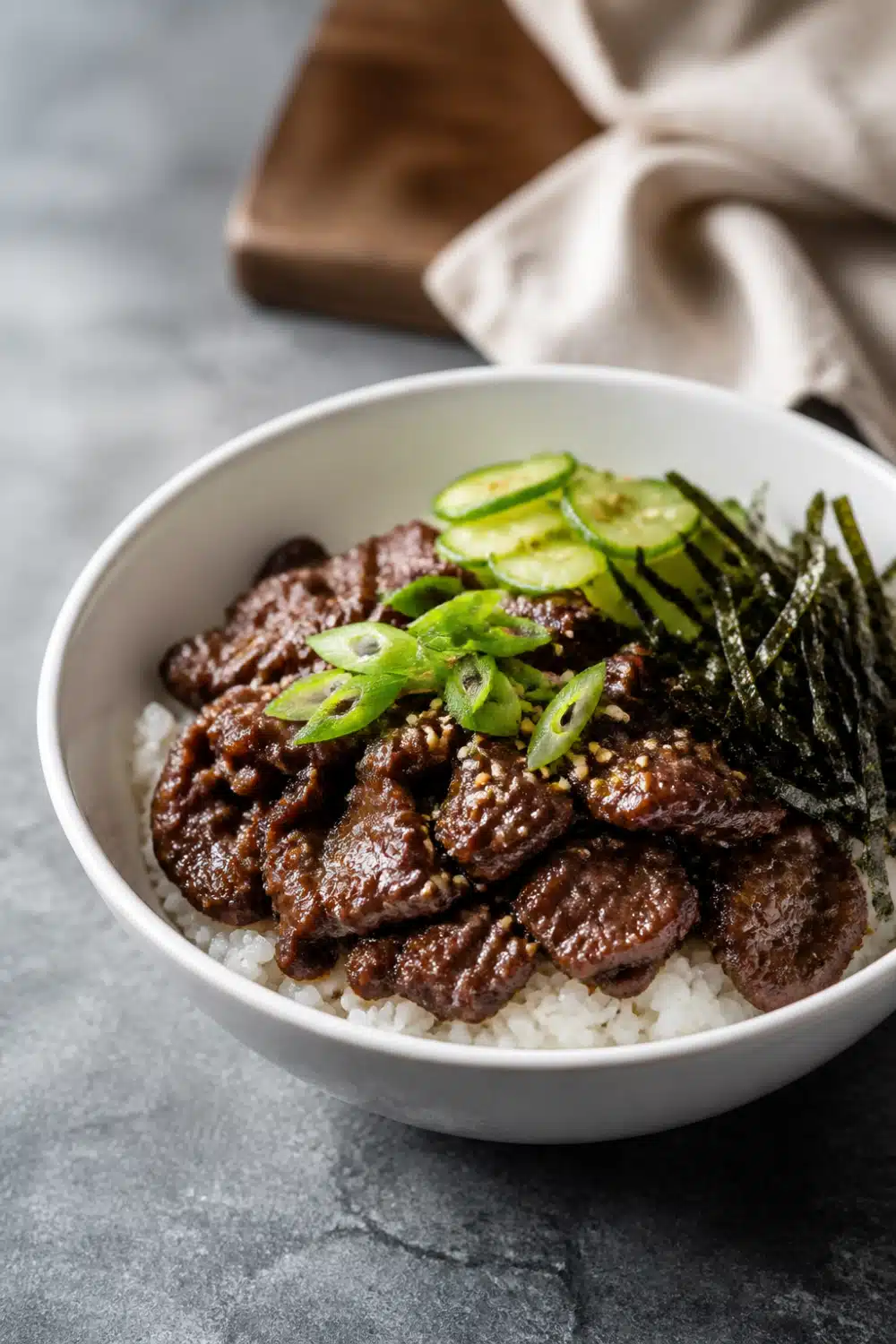
Ingredients You’ll Need
- 1 lb (450 g) ground beef
- Use 80/20 for classic flavor or 93/7 for a high-protein Korean beef bowl (leaner & lighter)
- 1/4 cup (60 ml) soy sauce (regular or low-sodium)
- Or tamari (1:1 swap) for gluten-free
- 2 tbsp (30 g) gochujang (Korean chili paste)—adjust to taste (1–2 tbsp for less/more spice)
- 2 tbsp (packed, 24 g) brown sugar or 1 tbsp honey (for mellow sweetness)
- 1 tbsp (15 ml) toasted sesame oil (for aroma, divided as needed)
- 3 garlic cloves, minced (about 1 tablespoon)
- 1 tsp (4 g) fresh ginger, finely grated
- 2 scallions, thinly sliced (reserve some green tops for garnish)
- 1 tbsp toasted sesame seeds (for topping)
- 1 cup (190 g) cooked short-grain or medium-grain rice per person (or 1 cup cauliflower rice for low-carb)
- Optional: 1 tsp gochugaru (Korean chili flakes) or crushed red chili flakes (for spicy beef bowl heat)
- Optional: 1 tsp cornstarch mixed with 1 tbsp cold water (for thickening glaze)
- Optional sides/toppings: shredded carrots, cucumber matchsticks, quick kimchi, sliced radish, nori strips
Step-by-Step Cooking Instructions
- Mise En Place: Wash and slice scallions, mince garlic and ginger, measure out sauce ingredients, and prepare rice or cauliflower rice separately according to package directions.
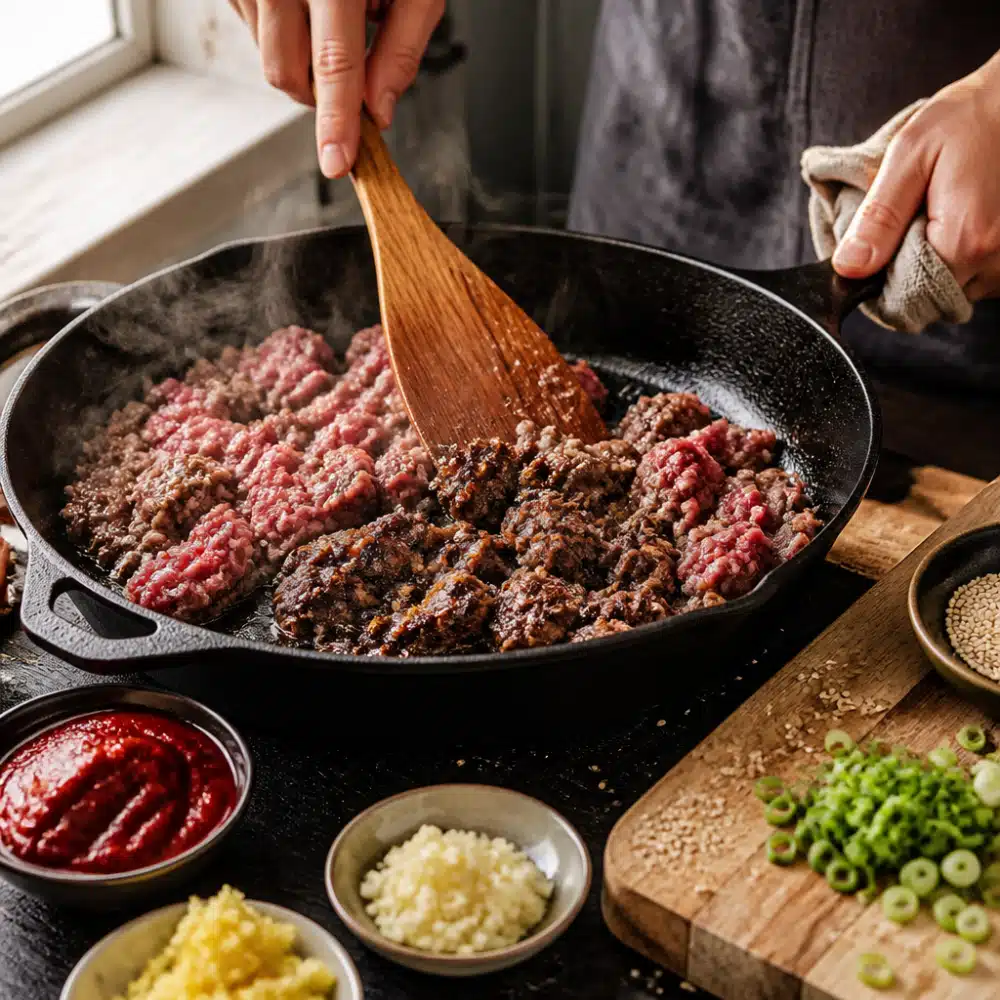
- Brown the Beef: Place a heavy 10–12 inch skillet (preferably cast iron) over medium-high heat for 3–4 minutes. Add ground beef and let it cook undisturbed for 3–4 minutes—listen for sizzling and look for deep caramel brown edges below. Don’t stir yet!
- Break up the beef with a wooden spoon and continue to cook, stirring every minute or so, until fully browned with crispy bits and no pink remains—about 2–3 more minutes. Drain excess fat if desired for a leaner result.
- Lower heat to medium. Make a well in the center of the skillet; add 1 tbsp sesame oil, minced garlic, ginger, and (if using extra spice) gochugaru. Sauté for 30 seconds until fragrant, then stir into beef.
- In a small bowl, whisk together soy sauce, gochujang, brown sugar (or honey) until smooth.
- Pour sauce mixture over beef. Stir well, scraping up any browned bits (fond) from the skillet bottom, and simmer for 2–3 minutes, letting the sauce bubble and thicken to a glossy, spoon-coating texture.
- If you like a clingier glaze, combine 1 tsp cornstarch with 1 tbsp water, drizzle into skillet, and simmer for another 30–60 seconds until very glossy (optional).
- Turn off heat. Stir in most of the scallions, saving some green tops for garnish. Taste and add a splash more sesame oil or a dash of rice vinegar for extra brightness if desired.
- Assemble Bowls: Scoop 3/4–1 cup cooked rice per bowl. Top each with 4 oz (about 110 g) beef, sprinkle with scallion greens, sesame seeds, and any favorite sides (carrot, cucumber, kimchi, nori strips). Serve hot!
Recipe Variations & Dietary Modifications
- Keto/Low-Carb Korean Beef Bowl: Replace all rice with 1–1.5 cups cauliflower rice per serving (just sauté 4–5 minutes). Use 93/7 beef. Omit brown sugar or swap for 1–1.5 tsp erythritol. Target 6–8 g net carbs per portion. Sauce is naturally low-carb, just watch total sodium (choose low-sodium soy/tamari).
- Vegan/Vegetarian Korean Beef Bowl: Swap beef for 16 oz (450 g) pressed extra-firm tofu or crumbled tempeh. Press and crumble tofu, pan-fry in 1 tbsp oil 6–8 minutes until golden-browned, then proceed with sauce as written (use 2–3 tbsp tamari and 2 tbsp gochujang—check labels for vegan, wheat-free options). Mix in 1 cup cooked edamame for extra plant protein.
- Gluten-Free Korean Beef Bowl: Use tamari instead of soy sauce (1:1), and confirm your gochujang is gluten-free (some brands contain wheat). If not, sub 1 tbsp gluten-free miso, 1 tbsp gochugaru, and 1 tsp chili paste for gochujang’s punch.
- Spicy Beef Bowl (or Mild Version): Control heat by using extra gochujang (up to 3 tbsp) and gochugaru, or keep it mild with 1 tbsp gochujang and omit chili flakes.
To adjust cooking time for these swaps: tofu and edamame need a few more minutes to brown, but saucing, simmering, and assembly are the same as the classic Korean Beef Bowl. Cauliflower rice cooks even faster than white rice!
Serving Suggestions & Pairings
The perfect Korean rice bowl starts with a foundation of fluffy short-grain rice (or cauliflower rice for low-carb), heaped with that caramelized beef and dripping with glossy gochujang sauce. Top with a tangle of scallion, a sprinkle of toasted sesame seeds, and serve with snappy sides like shaved carrot, quick cucumber pickles, or even fresh kimchi for crunch and tang.
Looking for pairings? Try miso soup, steamed asparagus, or crispy air fryer smashed potatoes for a fun cross-cultural meal. For an all-Korean experience, match with fermented banchan and a cold ginger-lemon tea.
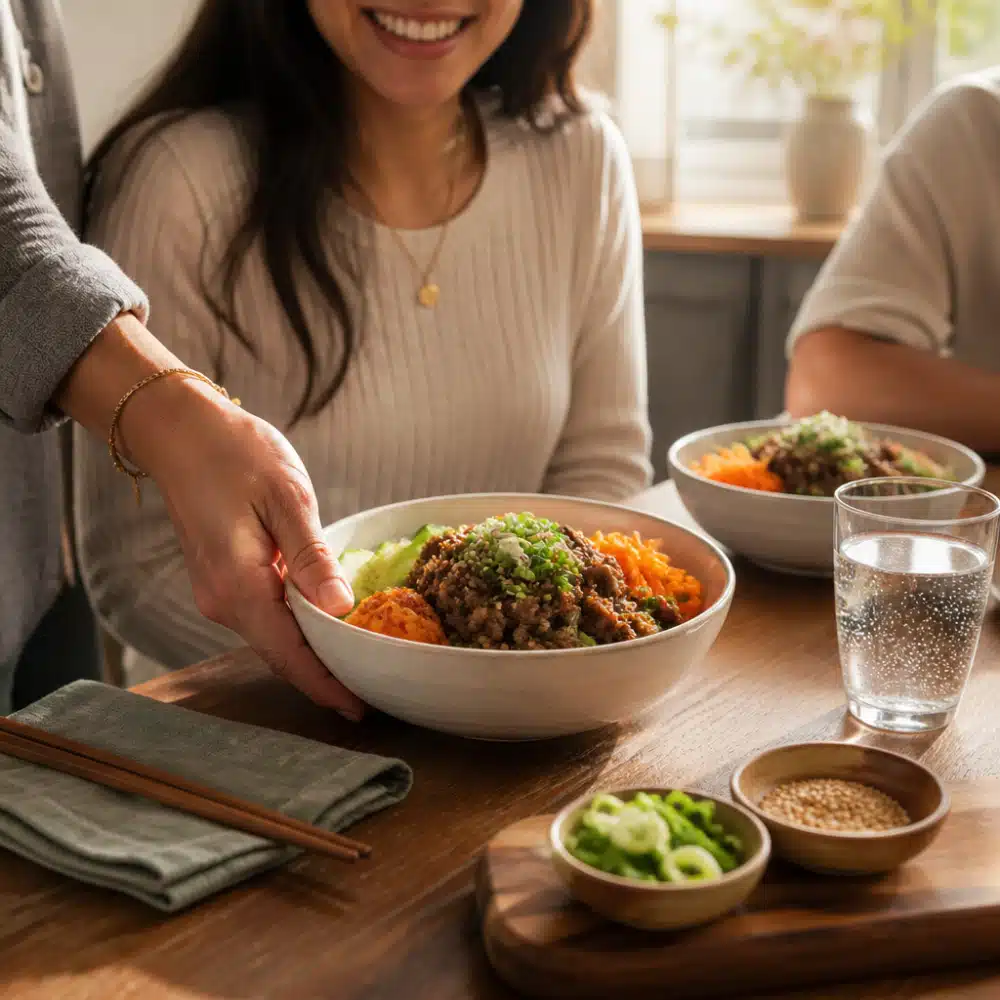
Garnish each bowl right before serving with another drizzle of toasted sesame oil, fresh scallions, and crispy nori strips for Instagram-ready polish—and an extra hit of that iconic aroma!
For a sweet finish, why not try these honey peach cream cheese cupcakes or a slice of cinnamon roll honeybun cheesecake?
Storage & Meal Prep Tips
Perfect for make-ahead lunches or freezer prep, the Korean Beef Bowl holds its flavor and tenderness for days with the right method. Cool cooked beef quickly (within 2 hours); pack in airtight containers at ≤40°F/4°C for up to 3–4 days. Store rice separately for best texture—rice keeps 4 days chilled, or 1 month in the freezer.
For the freezer, portion 1–1.5 cups beef per bag/container, press flat with as little air as possible, and freeze for up to 3 months at 0°F/−18°C. Thaw overnight in the fridge for best results. Reheat beef gently in a skillet with 1–2 tbsp water or unsalted broth until piping hot (165°F / 74°C), about 5–8 minutes. Or, microwave loosely covered on medium for 2–3 minutes, stirring once; add water and finish in short bursts so the sauce stays silky, not dry.
Always finish with a splash of fresh sesame oil and scallions after reheating—this revives aroma and flavor like magic!
Nutritional Information
Nutrition Facts (per serving):
Classic Korean Beef Bowl (80/20 beef + 1 cup rice): 680 kcal | Protein: 30 g | Carbs: 68 g | Fat: 32 g | Fiber: 2 g
High Protein Korean Beef Bowl (93/7 beef + edamame + 1 cup rice): 520 kcal | Protein: 42 g | Carbs: 48 g | Fat: 15 g | Fiber: 5 g
Low-Carb/Keto (cauliflower rice, 93/7 beef): 400 kcal | Protein: 36 g | Carbs: 9 g | Fat: 18 g | Fiber: 3 g
Plant-based (tofu/tempeh + rice): 490 kcal | Protein: 24 g | Carbs: 60 g | Fat: 12 g | Fiber: 5 g
Detailed macros will change based on swaps and brands. For precise breakdowns, plug your ingredient list into a tool like MyFitnessPal or NutritionData. Aim for low-sodium soy to keep salt under control.
Conclusion
This is truly the weeknight hero dish you’ll come back to again and again—the Korean Beef Bowl is addictively punchy, loaded with craveable caramelized flavor, and endlessly customizable for any diet or pantry. With exact measurements, step-by-step guidance, and plenty of meal-prep and freezer tips, this Korean Beef Bowl makes high-protein, family-friendly eating quick, healthy, and a little bit exciting any night of the week.
Try it, tweak it, and make it your go-to. Don’t forget to share your Korean Beef Bowl masterpiece on social media (#airfryerjoy), leave a comment with your favorite swaps, or let me know what you paired it with! Happy cooking, and may all your beef bowls be glossy, spicy, and totally delicious every single time.
FAQ
Can I make this Korean Beef Bowl ahead for meal prep?
Absolutely! This Korean Beef Bowl is a meal prep champion. Cook the beef and rice, cool thoroughly, and portion into airtight containers. Store in the fridge for up to 4 days, or freeze beef (separately) for up to 3 months. Add fresh toppings just before serving for best texture.
What’s the best way to make a high protein Korean beef bowl?
For more protein, use 93/7 lean ground beef and add 1 cup shelled edamame during the last 2–3 minutes of cooking. You can also swap in ground turkey or add crispy baked tofu. This boosts protein per serving from ~30 g to 40+ g, perfect for athletes and meal preppers.
How spicy is the Korean Beef Bowl, and how can I adjust it?
You control the heat! Start with 2 tbsp gochujang for mild-medium fire, or use just 1 tbsp for a gentle version. Love it hot? Add up to 3 tbsp gochujang plus 1 tsp gochugaru or chili flakes. Gochujang brings more depth than raw chili powders.
Is this Korean Beef Bowl gluten-free?
It’s easy to make the Korean Beef Bowl gluten-free: swap tamari for soy sauce (same amount) and double-check gochujang packaging for wheat-free brands. If you need an alternative, a mix of gluten-free miso and chili powder can substitute gochujang’s flavor punch.
What are the best vegan swaps for a Korean Beef Bowl?
For a plant-based Korean Beef Bowl, use 16 oz firm tofu (crumbled and pan-fried until golden) or tempeh. Replace beef 1:1. Use vegan gochujang and tamari in the sauce. Edamame adds more bite and boosts protein to ~25 g per bowl.
What if my sauce is too salty or too thick?
If your sauce is too salty, dilute with 1–2 tbsp water or a splash of unsalted stock, or stir in 1 tsp rice vinegar to balance. If it’s too thick, loosen with a spoonful of water as you reheat. Start with low-sodium soy if you’re salt-sensitive.
– Sauce burnt or gochujang bitter? Lower the heat, sauté aromatics gently, and add sugar after meat is deglazed. If bitter, whisk in 1–2 tsp rice vinegar.
– Beef mushy? Don’t stir in the first 3–4 minutes, let it sear and caramelize.
– Sauce too salty? Use low-sodium soy, or dilute with water/vinegar.
Ready for another meal-prep win? Check out this baked pumpkin spice pudding for a cozy, nutrient-rich dessert!